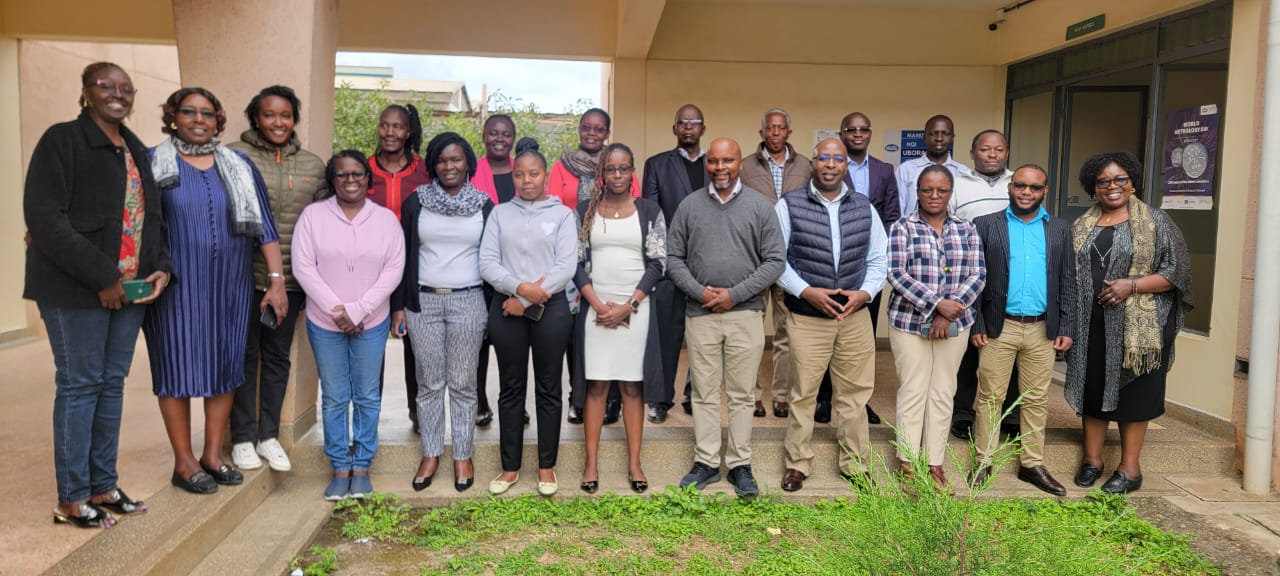
On June 10, 2025, Chuka University dons together with other stakeholders including the University of Nairobi and Kenya Bureau of Standards (KEBS) rolled out a cutting-edge, five-year research initiative aimed at managing aflatoxin contamination in Kenya’s food and feed systems. The launch, held at the KEBS headquarters and backed by Danish aid agency DANIDA, involved stakeholders across the public-sector regulators, private producers, enforcement agencies and critically, the academic community including Chuka University and Technical University of Denmark and University of Nairobi scholars as key collaborators.
This project, known as RECLAIM-KE (Resilient Climate-Smart Aflatoxin Intervention and Monitoring in Kenya) is a national collaboration spearheaded by Dr. Patrick Njage, a senior research scientist at the Technical University of Denmark (DTU), who serves as the Principal Investigator (PI), Prof. Shelmith Munyiri (Chuka University) and Prof. Maina Wagacha (University of Nairobi) both senior researchers will serve as the Co-Principal Investigators. This Project will train several PhD and MSc students in both universities in Kenya to pursue their degrees under full scholarship.
Why This Project Matters
Aflatoxins are toxic by-products produced by certain fungi on staple crops like maize and peanuts. They have both acute and chronic toxicities. Among the types of aflatoxins, Aflatoxin B1 has been proven to be a human carcinogen. Long-term exposure can lead to liver cancer, stunted growth in children, immune deficiency, and can severely hamper agricultural trade due to strict international limits.
What the Project Entails
- Partnerships between Chuka University researchers, the University of Nairobi, Technical University of Denmark, KEBs, National and County governments, farmers, industry players, and regulators.
- Smart surveillance and mitigation across the entire food value chain, not just formal markets, to stop contamination of grains seeping into homes, informal markets and/or schools.
- Integration of artificial intelligence (AI) modeling, genomic analysis, and microbial biocontrol methods that aim to predict and prevent outbreaks before they occur
RECLAIM-KE is more than just a food-safety initiative—it’s a national collaboration that recognizes the powerful role of academic institutions in engineering real change. Chuka University’s involvement isn’t just educational—it’s transformative, building local solutions that protect health, economies, and the future.